
Open PhD position (AGILE Marie Curie Doctoral Network), University of Warwick
Posted on 16 March 2026
Job type: PhD
Location: University of Warwick, UK
Closing Date: 15 April 2026
Project Title: Understanding peri-nuclear actin organisation in response to environmental stresses and its effect on nuclear architecture.
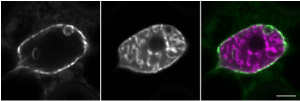
Abstract: Plant cell nuclei undergo striking changes in size and shape under environmental stress, processes linked to the organisation of the actin cytoskeleton. This project will investigate how peri-nuclear actin regulates nuclear architecture and mediates responses to environmental stress, particularly heat stress.
Objective 1: Characterize peri-nuclear actin organization under normal conditions using lattice-SIM and spinning disk confocal microscopy.
Objective 2: Investigate real-time changes in peri-nuclear actin organization during rapid heat stress.
Objective 3: Examine the relationship between peri-nuclear actin reorganization and the redistribution of nuclear lamina proteins (CRWN and KAKU) under heat stress, using dual-color 3D lattice-SIM imaging.
The project includes research secondments with Dr. Kasper van Gelderen (University of Heidelberg) and the commercial company Inteherence (Germany) to optimize the VaHeat microscopy-based heat shock system for plant cytoskeleton imaging.
This interdisciplinary project integrates advanced live-cell imaging, plant molecular biology, and biophysics to reveal how the actin cytoskeleton interacts with the plant nucleus under stress.
Requirements: Experience in cell biology and/or molecular biology is required. Previous experience with plant research is desirable but not essential if the applicant has a strong background in cell biology. A Master’s degree (or equivalent) in a relevant field is desirable. Due to Marie Skłodowska-Curie mobility rules, applicants must not have resided or carried out their main activity (work or study) in the UK for more than 12 months during the 3 years prior to recruitment.
Training benefits: The student will receive training in lattice-structured illumination microscopy (L-SIM), spinning disk confocal live-cell imaging, image analysis, and molecular biology techniques.
Environment: The University of Warwick School of Life Sciences contains a wide research base spanning cell biology and plant science, with research capacity to go from fundamental discovery through to field trials. We have received significant investment in bioimaging infrastructure and this will be utilised within this project. The McKenna lab is a young, ambitious and friendly research group working over numerous projects in cytoskeleton and organelle organisation and dynamics in plants with a long term scientific vision to engineer these processes to alter plant traits.
For Questions please contact: joe.mckenna@warwick.ac.uk and contact@msca-agile.eu
Lab Website: https://profiles.warwick.ac.uk/u2070354-joe-mckenna/about
AGILE Website: https://cordis.europa.eu/project/id/101226536 and https://www.msca-agile.eu