
Venezuela
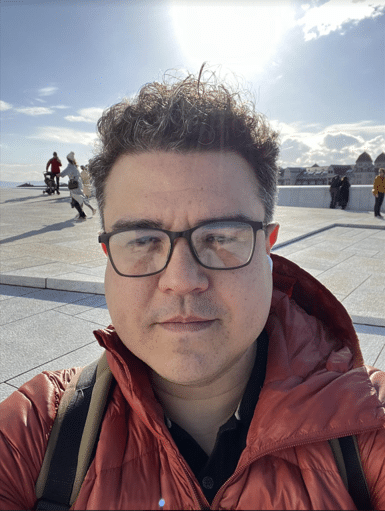
One of the world’s 17 megadiverse countries, Venezuela’s biological prowess is highly impressive. Venezuela’s geographical location is paramount to its incredible biodiversity; the country is home to four dichotomous topographical regions: the northwestern lowlands, the northern mountains, the central plains and the southeastern Guiana highlands (the latter of which hosts the northern parts of the Amazon rainforest and Angel Falls, the world’s largest waterfall). Thus, it is no surprise that Venezuela has a plethora of endemic species, around 8,000 (the fifth highest in the world). Due to this ecological prowess, Venezuela has produced many esteemed scientists. Of particular note is Juan Quintana, a microscopist currently studying mesoscopy and expansion microscopy. Juan discovered his love of science at an early age; he would spend hours looking at his grandparents’ Encyclopaedia Britannica as a child. This love developed into a possible career when he was accepted into Universidad de Carabobo to study biology, where he pursued a career in microscopy. Juan continued his academia, doing his MSc in Spain and his PhD at the University of Edinburgh. Juan’s versatile career has included working in the fields of microscopy, cell biology and parasitology, as Wellcome Trust Fellow and a group leader at the Division of immunology, the Lydia Becker Institute of Immunology and Inflammation, and the Geoffrey Jefferson Centre for Brain Research. Juan recently achieved the British Society for Parasitology Award for his work in the field. This blog details Juan’s extensive career in microscopy, as well as his Venezuelan heritage and the pros and cons this brought him.
An interview with Juan Quintana
Posted by Mariana De Niz, on 25 June 2024
Get involved
Create an account or log in to post your story on FocalPlane.
Have an idea for a blog series?
You may also be interested in these blog series: