

The journey of co-organizing the GloBIAS Training School in Kobe, Japan, by Ana Stojiljkovic
Posted by Beatriz Serrano-Solano, on 26 February 2026
This article was written by Ana Stojiljkovic, Bioimage Analyst in the Data Science Lab, University of Bern, Switzerland
After many years of being active in the NEUBIAS community, first as a trainee and later as a trainer and conference organizer, I was excited and curious to embark on the GloBIAS journey. After a successful first workshop in Gothenburg, where I co-organised one of the sessions, I felt ready to invest more time and energy in this new adventure, and, without hesitation, I registered for the working group “organising the 2025 workshop”. At that time, nothing had been announced, we didn’t even know where it would take place. We were simply committed to making it happen and learning from the experience.
I was filled with joy and excitement when Kota Miura, President of the GloBIAS Executive Board, announced that the first GloBIAS conference would be held in Kobe, Japan. On one hand, I was looking forward to discovering Kota’s country, confident that he would offer us an authentic view of Japan and its culture. On the other hand, it meant we would truly have a global experience by organizing our first conference outside Europe and stepping out of our comfort zone. It really felt like we were going global.
The training school’s organization started smoothly, and I was happy to take on this experience again with Rocco D’Antuono, with whom I had already organized other training schools. I fully trusted my experienced organizing companion and good friend, and Kota also introduced us to two amazing local organizers, Kagayaki Kato and Shinya Komoto. Very quickly, we had a lineup of very experienced trainers in bioimage analysis from around the world. The recruitment was easy, as most of them were already involved in GloBIAS throughout the year, working in different working groups (e.g., the HPC and cloud computing for image analysis working group). Those who were not yet involved in GloBIAS were simply enthusiastic about jumping on board. Even though the time zone differences could have been an issue, everyone was so motivated to make it work that it did not disturb us much. We set up a Google Doc, and already during the first meeting, the program began to take shape, with everyone ready to contribute to one or more of the sessions we had proposed.
The first GloBIAS training school focused on the use of high-performance computing. As dataset sizes are rapidly growing and the school was intended for bioimage analysts with some experience in the field, we knew they would soon face challenges related to computational resources. For this reason, we wanted to share our experience and provide them with modern pipelines that follow the principles of scalability, reproducibility, and, of course, open science. The program combined foundational concepts with hands-on sessions and covered tools such as scikit-image and napari, as well as workflow management systems for large datasets. We also touched upon machine learning basics and the use of high-performance computing to scale analysis solutions.
Once again, we faced something that could have seemed like an obstacle. Organizing high-performance computing resources for a global audience might have sounded like a major challenge, but it was quickly resolved thanks to our trainers’ expertise and enthusiasm. Since this had already been discussed within the HPC working group, they had a clear idea of how to approach it, and in no time, the infrastructure for the training school was ready. In particular, thanks to the contribution of the EMBL trainers, and especially Yi Sun, who not only set up the BAND platform (https://bandv1.denbi.uni-tuebingen.de/#/eosc-landingpage) for international users but also followed each session during the school and provided immediate support. His commitment ensured that there were no major issues when using BAND in Japan.
Soon enough, all the training materials were ready, and we dedicated ourselves to selecting the travel grantees. The motivation letters were evaluated through a blinded review process, with each trainer assessing all applications to ensure a fair voting system. The top-ranked applications were then considered with attention to diversity and geographic representation to ensure a fair and inclusive distribution of the grants. The travel grants were made possible thanks to the generous support of the Chan Zuckerberg Initiative.
I remember the surprise and a bit of concern in our (the trainers’) eyes when Rocco announced that we would invite 50 participants. I have attended and organized different training schools across Europe, but imagining training so many people simultaneously in one room made it difficult to believe that everything would run smoothly. This training school already announced itself as something special, not only for being the first international one, but also for the new dynamics it seemed to bring. But at that moment, there was no real time to think too much about it, because the flight to Japan was about to take off and an incredible adventure was about to begin.
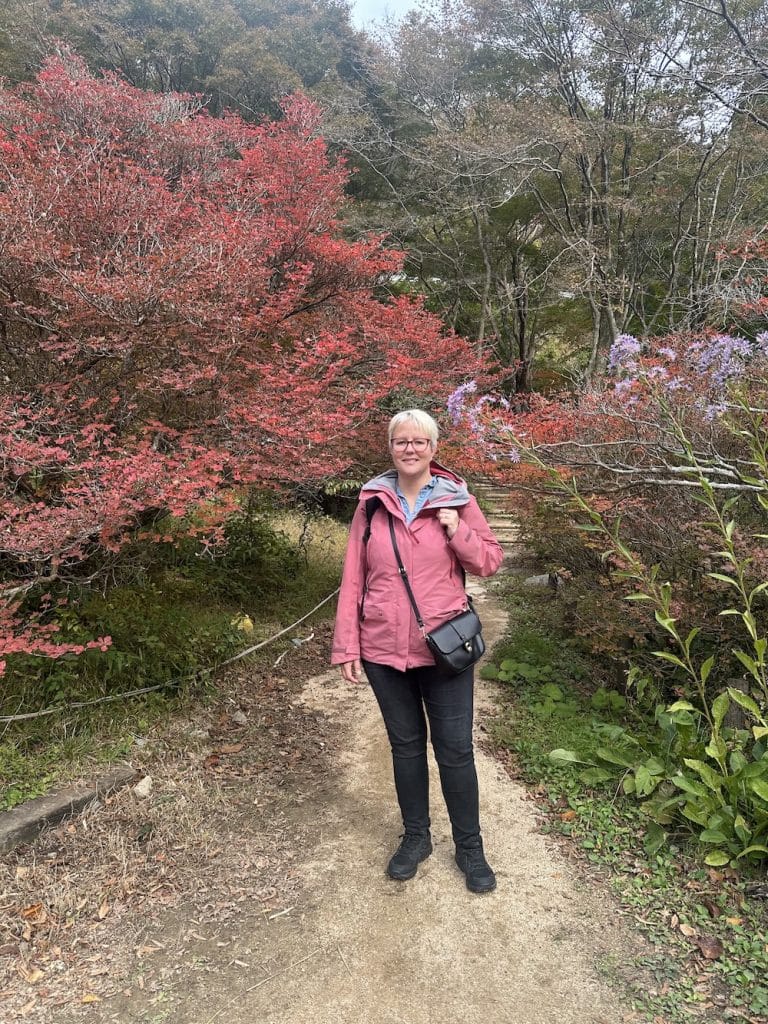
Once I arrived in Japan, any concerns simply disappeared as the country captured my full attention. It was my first time in this beautiful place, and visiting it in autumn was a special pleasure, as the famous foliage was just starting. My dear cousin, who fell in love with Japan and has since travelled to every corner of it, wrote me a personalized plan of what he thought was worth visiting in such a short time. In five days, I went from the skyscrapers of Tokyo to the peaceful temples and stunning ocean views of Kamakura. Next, I found myself walking through the red torii gates in Kyoto and visiting its historic streets and the Golden Temple. I quickly passed by Nara to say hi to the curious deer, and before I knew it, I was in Osaka visiting the great aquarium and lively Den Den Town. Finally, I enjoyed a traditional onsen in Arima and admired the stunning view of Kobe from Mount Rokko. That night, I also met the trainers’ team for our first evening together. There, we experienced a typical izakaya, where ordering without Kota would probably have ended in disaster. The first impression of being together with all these people was incredible, even though with some of them we had only ever met online.

The next day, we met the incredible local organizing team. They solved every issue with a big smile, and with them, nothing ever sounded impossible. After preparing the rooms in the morning, the school finally kicked off. I must admit, it was a bit scary to see all the participants gathering in the room. Suddenly, I came back to reality and started wondering how they would react when we announced that they would need to form groups and work together to solve a bioimage analysis problem by the end of the school. After all, they came from very different backgrounds, and it was the first time we had welcomed such a big and diverse community. It was emotional to see their enthusiasm when we explained the task. The groups started forming naturally, almost effortlessly. People with different experiences and expertise clustered together as if it were the most natural thing to do.
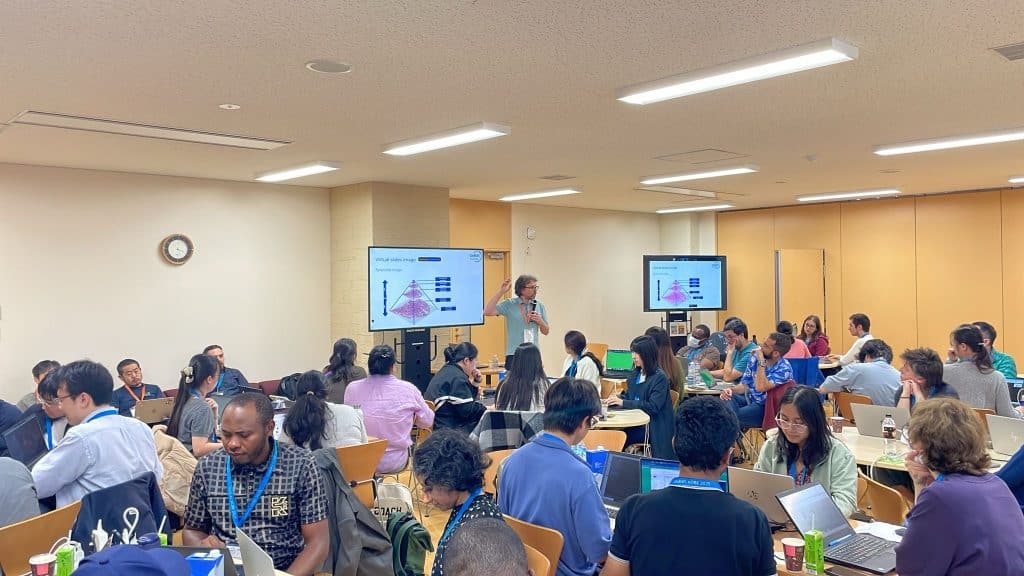
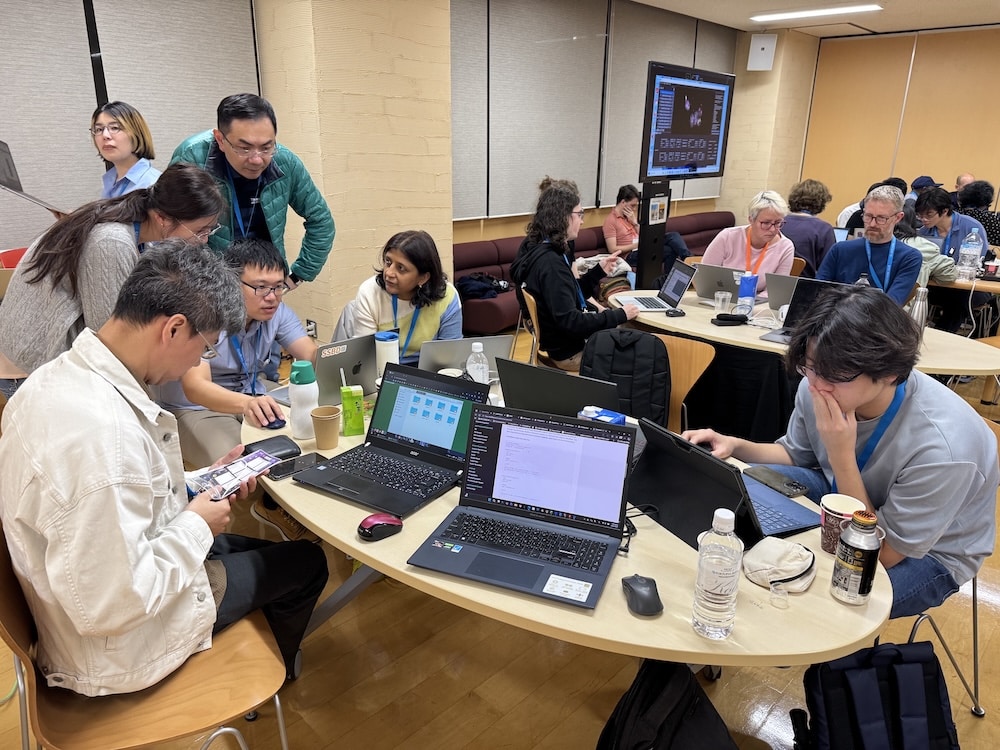
In the mornings, the trainees were focused and curious, asking many questions during each session. In the afternoons, they returned to their groups and worked intensely. It looked like a beehive, so coordinated and productive. The trainers walked around, sharing their experience, guiding discussions, and sometimes even tackling new challenges themselves.
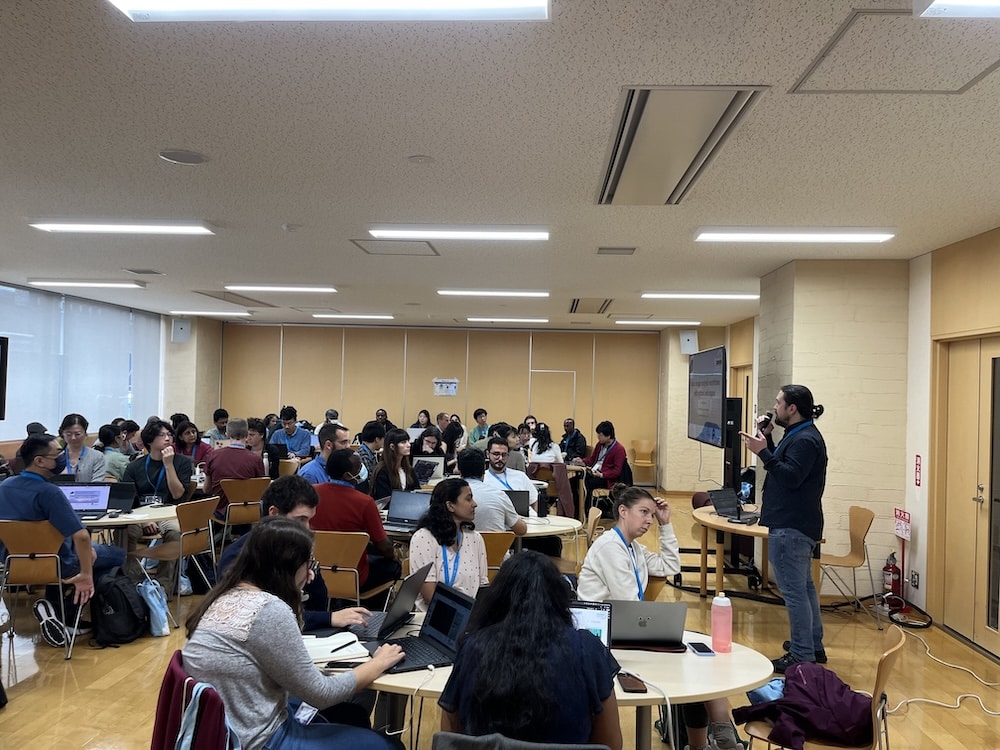
The school culminated in the group presentations, and in the end, we decided to assign a prize for the best one. It was mostly symbolic, a way to acknowledge the incredible work they had accomplished in such a short time.
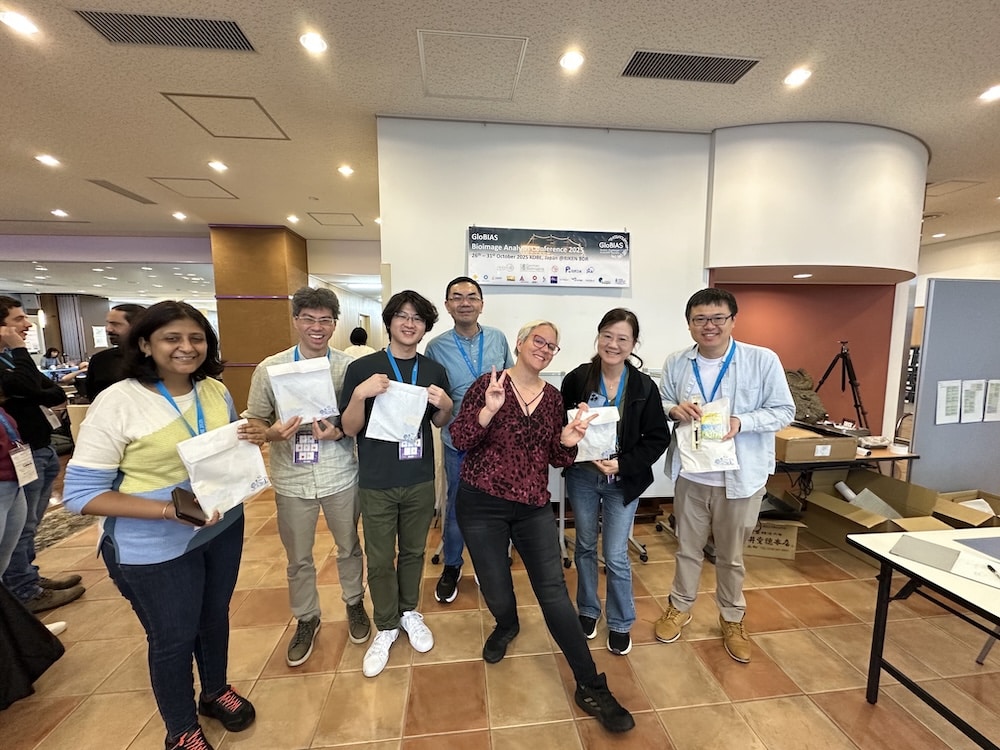
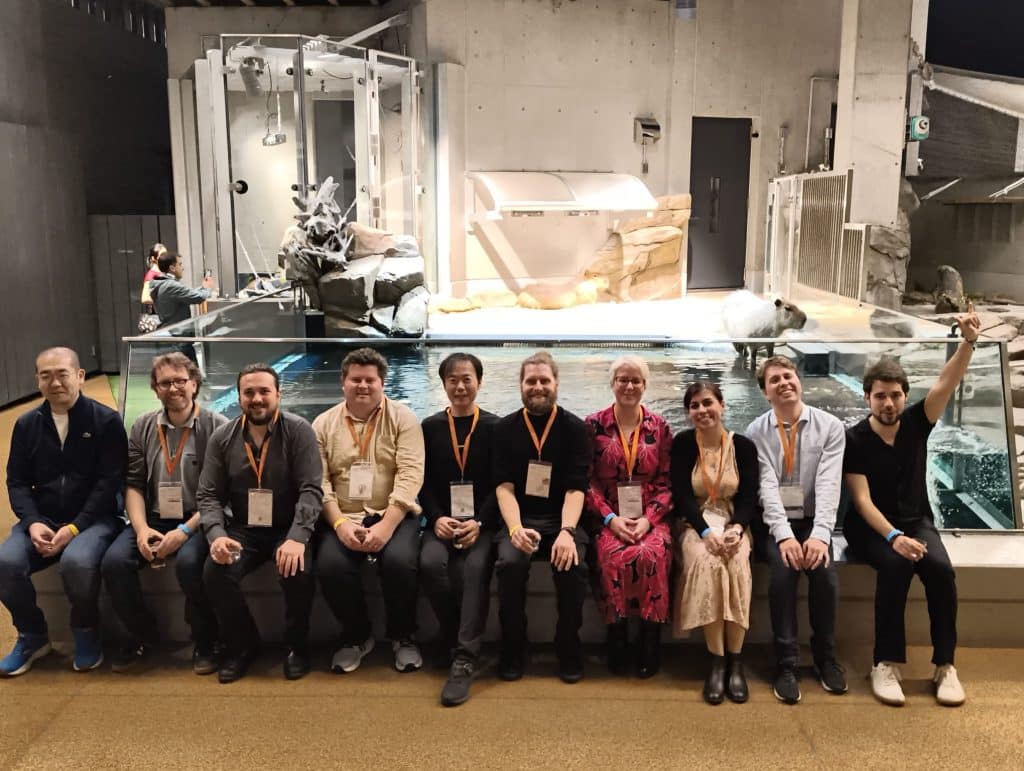
After the training school, the conference registration opened, and it was exciting to meet even more colleagues and friends, and to make new ones. An advantage of having a training school before the conference is that many people already know each other, so during the conference, they can dive straight into discussions about newly started collaborations and share their work through talks, posters, and the software lounge. The days flew by because we were having so much fun, even if they were long and intense. During the day, we attended sessions, and in the evenings, we explored the busy streets of Kobe in search of good restaurants. We concluded the evenings with a traditional karaoke session. The best part? Singing Japanese anime songs, we had never heard before, at the top of our lungs. Later, to recover at least a little before the next conference day, we followed the guidance of the local organizer, Ko Sugawara, to find the best midnight ramen in town. The local committee made everything even more special by organizing activities such as a visit to a sake brewery, a wonderful kumi-daiko performance (Japanese drumming), and a gala dinner at the aquarium in Kobe.
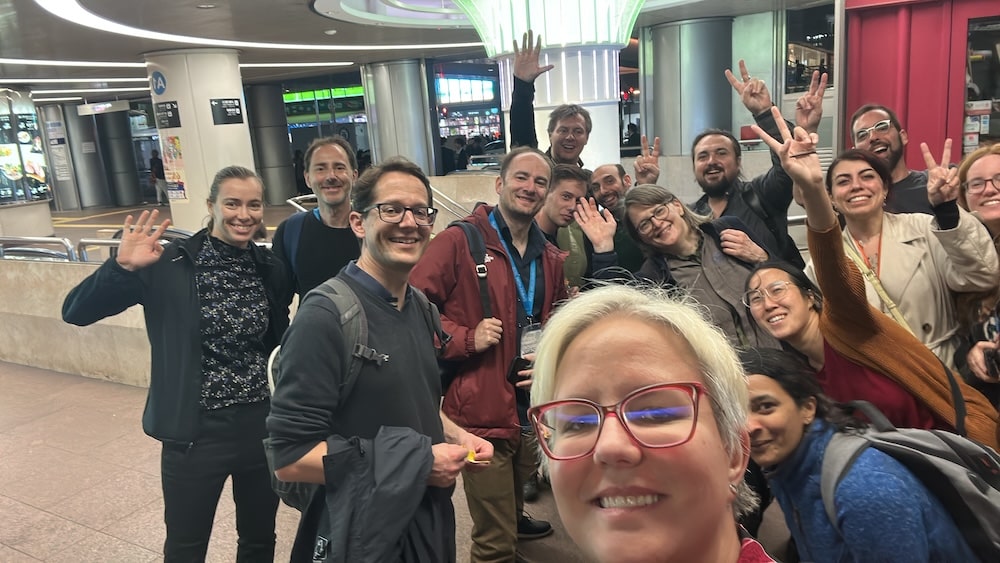
GloBIAS announced itself as something new and challenging, because building a global community means collaborating with researchers from around the world, each with different cultural backgrounds and expectations. It turned out that, in the field of bioimage analysis, we are much more similar than we might think, and that language and culture are not barriers to reaching common goals. Instead, they are an enrichment that makes our work even more enjoyable and our community lively and colourful.
I took the flight back with a heart full of indelible personal and professional memories from this unique adventure. What will not remain just a memory are the new friendships and collaborations, and I am already looking forward to the next chapters of the GloBIAS book.
My most sincere thanks go to the organizers of the GloBIAS Conference in Kobe 2025, including the local training school organizers, Kagayaki Kato and Shinya Komoto. I am particularly grateful to my dear friend and colleague Rocco D’Antuono, without whom the organization would not have run nearly as smoothly. I would also like to thank the incredible trainers who accepted our invitation without hesitation: Elnaz Fazeli, Simon Leclerc, Sebastian Gonzalez Tirado, Benjamin Pavie, Tatiana Woller, Yi Sun, Dominik Kutra, and Nicholas Condon. Finally, my heartfelt thanks go to the amazing and unstoppable trainees who made this first GloBIAS training school such a special experience.
Ana Stojiljkovic
Bioimage Analyst in the Data Science Lab
University of Bern
Switzerland
 (No Ratings Yet)
Wonderful story, thanks for sharing!