Hacking with GloBIAS by Miguel A. Ibarra Arellano
Posted by Beatriz Serrano-Solano, on 1 April 2026
This article was written by Miguel A. Ibarra Arellano, PhD candidate at the Center for Computational Biology at the University of Heidelberg, Germany.
Seeing is believing, or at least that’s what I thought. Picture this: starting your master’s thesis, you are tasked with identifying (and, if you are lucky, quantifying) the difference between male and female in images. Simple right? The catch? Tens of thousands of images from the interior surface of the eye. You just jump onto an exciting quest to understand biology from images. Welcome to bioimaging. Fast forward some years, and you are now working on image-based spatial omics. You come across the call for participation in the GloBIAS Bioimage Analysis Conference 2025 in Kobe, and you can’t hold your excitement. You know you have to attend.
The Hackathon
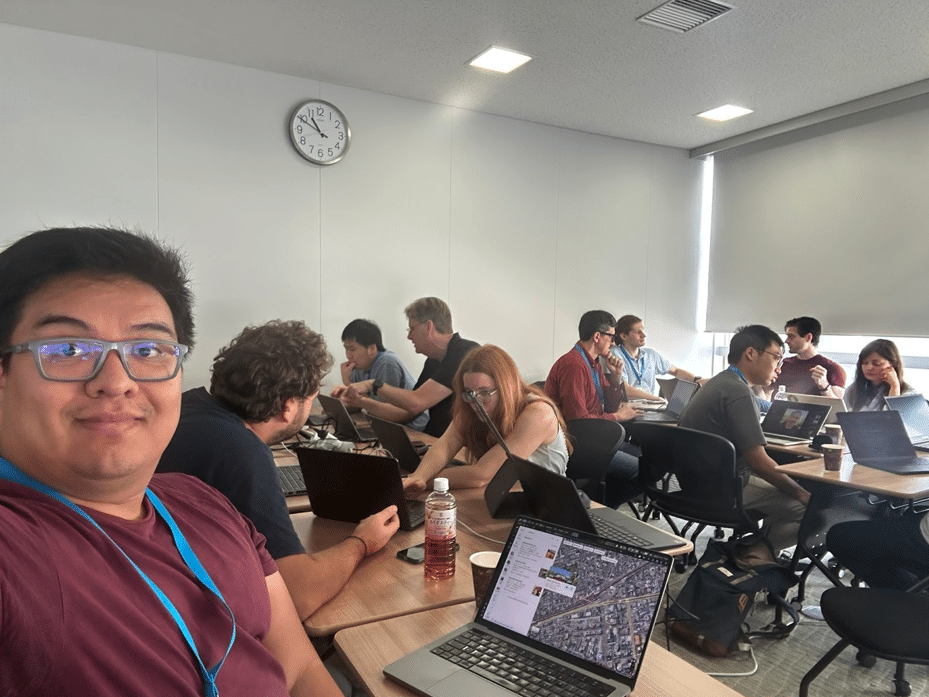
As a researcher, I have always considered hackathons one of the most important activities of my job. Hackathons allow participants to connect with one another, share their current technical struggles, and solve them using each other’s expertise. Hackathons then provide the perfect opportunity to learn and contribute in an informal environment. Although it can be intimidating at first, as problems arise, conversations unfold, and expertise is shared. All of this is happening whilst encouraging each other under a tight deadline to achieve results. And by the end of it, and independently of the outcome, you leave with a strong sense of camaraderie and belonging.
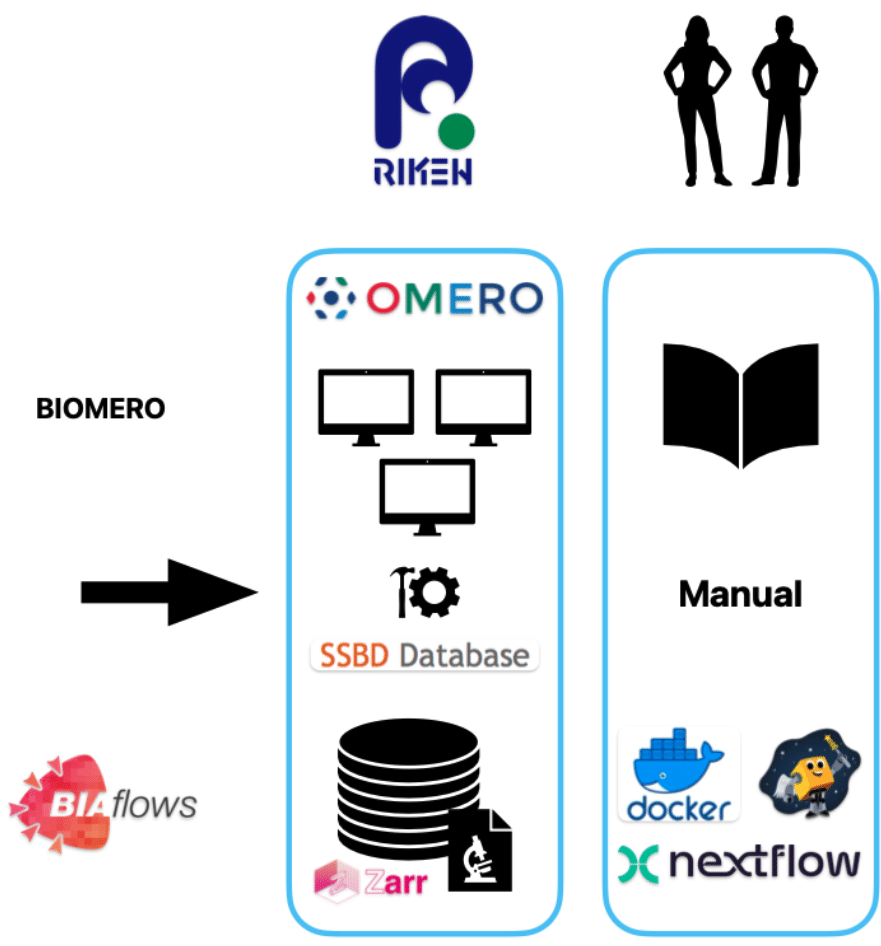
Two hackathons took place at this conference, one focused on Napari, the other on BIAFLOWS [1], BIOMERO [2], and SSBD [3]. I participated in the latter one, together with other participants who had prepped for weeks before the hackathon, getting to know each other and the tools and frameworks we would use in advance. Our objectives were clear: bringing BIOMERO [2] onto the OMERO [4] servers used at RIKEN and to process a selection of OME-Zarr datasets using the BIAFLOWS [1] containerized workflows. Nonetheless, we did not limit ourselves to those goals alone. We explored other desirable features to implement across other platforms. We also explored new ways to do so, focusing on Pixi [5] over Conda implemented in Docker and Nextflow [6]. All in pursuit of interoperability of the tools and FAIRification of the data. Divide and conquer was the strategy, and indeed we conquered. Imagine an overwhelming flow of expertise with periods of intense discussion and focused work repeated in tandem.
Beyond this dance of knowledge, we focused on an unfortunately often-overlooked part of the process: documentation. A manual from the community, to the community. What do you need? How do you do it? What can you achieve? Dear reader, you may ask why this contribution is so important in my eyes. All bioimage analysts come from different backgrounds, and we should make sure everybody gets access to the expertise that was shared. This diversity is our weakness as individuals, but our strength as a community.
Overview of the hackathon objectives and results
The Community
I used to describe myself as a jack-of-all-trades. I wasn’t a computer scientist, nor was I a pure biologist. I was something in between. Fascinated with understanding the processes in biology and computers, it was hard for me to choose between them. But, through conferences, hackathons, and talking to amazing people, I found my community, the bioimaging community.
I am not a bioimage analyst by training, but imagine my surprise when I realised that no one really is. Whether from physics, biology, microscopy, or computer science, all bioimage analysts forged their paths in this field out of curiosity and a need to understand and see the world around them. We are all aware of the struggle it represents to do it alone. That’s why we come together as a community.
Being part of this community also meant I could reconnect with the colleagues and friends I made along the way. Not only is that an amazing feeling in terms of camaraderie, but it also helps keep you up to date on everyone’s current work, technical struggles, and solutions. And I would like to focus here on what I mean: bioimaging encompasses imaging, biology, data governance, and computational infrastructure and tools. All of these elements are important and matter to us. And sitting in that room, surrounded by senior developers and leaders from established groups, discussing one-on-one, on equal terms, was a thrilling sight. The GloBIAS conference and this Hackathon in particular cemented my beliefs. There’s strength in numbers, in sharing expertise and the wealth of knowledge in this community, and I’m proud to be a part of it.
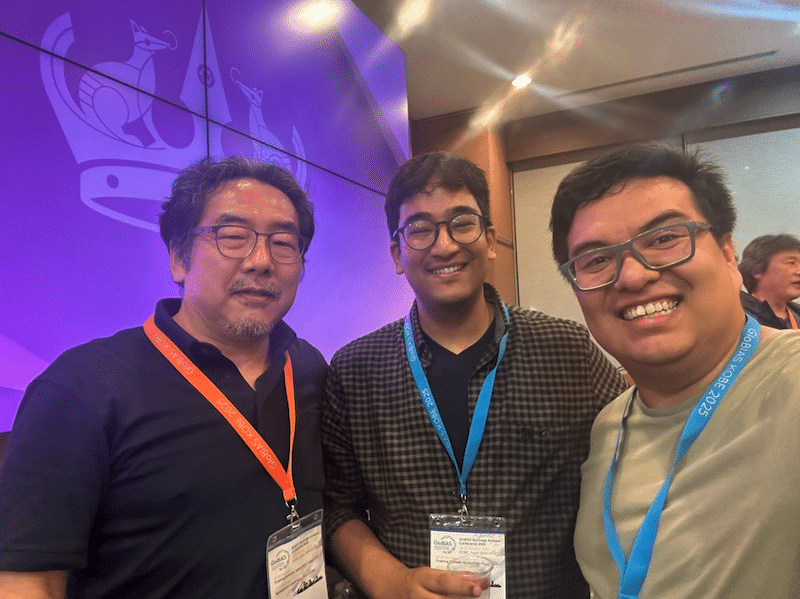
Japan and the Conference
Since I was a kid, I’ve always known I would visit Japan, no matter the circumstances. But nothing could’ve prepared me for the dynamic interplay of my visit and the GloBIAS conference. If I can summarize this experience in one word, I will choose “intentionality”. From the scope of the hackathons, the selection of the talks, and the brilliant idea of the open-source software lounge, the academic aspect of this conference felt precise and carefully organized. Beyond the academic program, the neatly packed bento boxes for lunch, the freshest sushi I’ve ever had at the reception, the sweets and candy offered during the coffee breaks, and the amazing welcome gifts, everything to make you feel special. Either by listening to Jazz while eating delicious Kobe beef, accompanied by the wonderful views at átoa Aquarium. Or by enjoying a fine dining experience, accompanied by an amazing sake selection while witnessing a jaw-dropping Taiko performance. The whole experience exceeded any preconceived expectation.
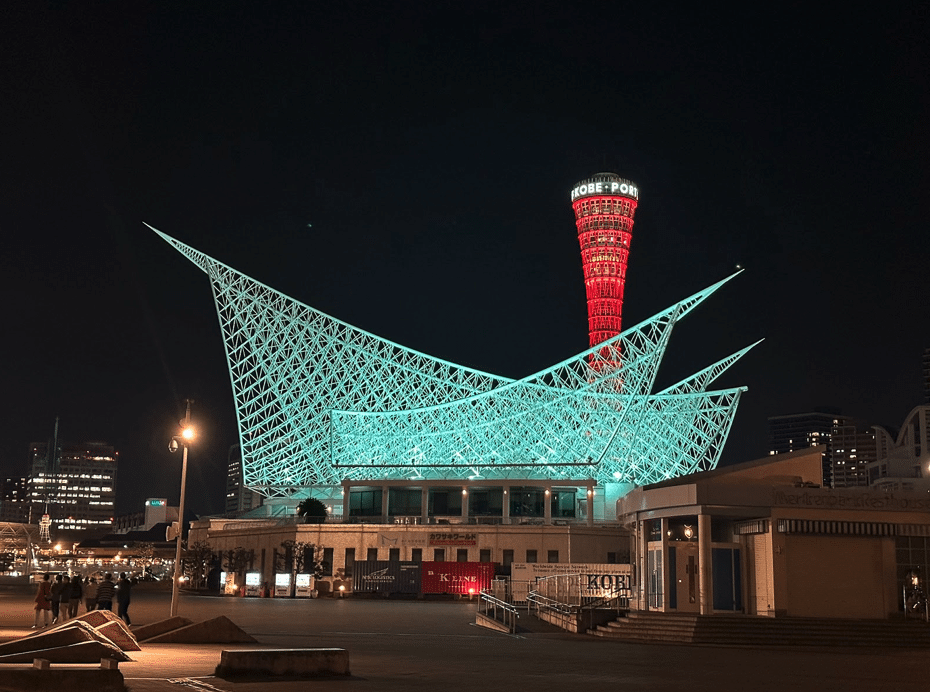
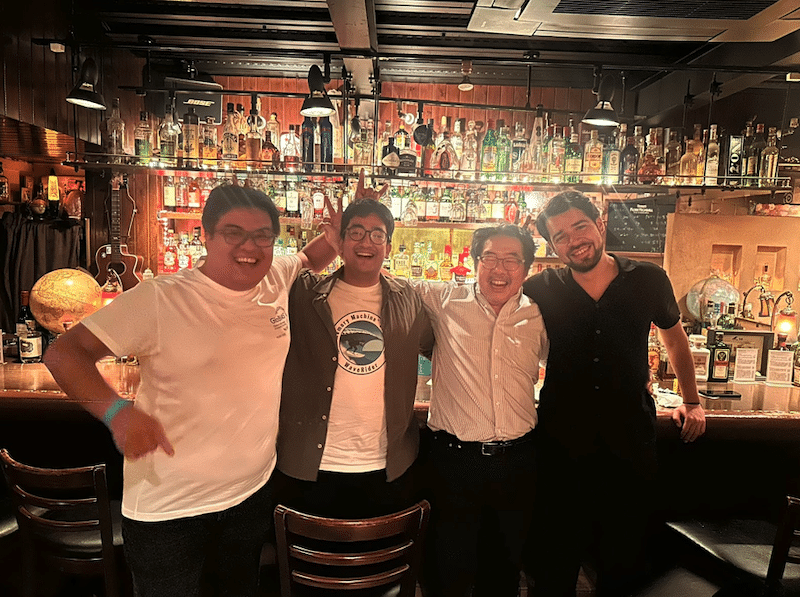
Landing in Osaka after 20+ hours of sleepless travel, I felt excited and energized like never before. I had made it to Japan. Heading directly from the airport to Kobe, I got a breathtaking view of the skyline of the Osaka Bay. Staying close to Sannomiya station and walking every morning from the hotel towards the RIKEN BDR building, where the conference took place, was a small adventure each day. I would pass by the Ikuta Shrine and take a different path every day, grabbing something small for breakfast before going to the conference venue. Nothing could’ve prepared my senses for this experience, the vast crowds, the clean streets, the tantalizing smell of delicious food around every corner, and the gentle play of bird sounds at every crossing light. Japan is truly a place where tradition and modernity intermix in what I can only describe as orderly chaos. At night, the city changed, with vibrant colors and streets full of life, surprising you. Casually running into other attendees on a casual walk, or grabbing beers with the Legend Kota Miura, while talking about the different paths that led us to bioimaging.
Looking ahead
I could keep rambling about the hackathon, the conference, the people, and the trip. About how the most mundane things suddenly acquired a new glow: the tall residential buildings, a street performer, or a shrine with a cute cat watching over. Or about how a group of people from all over the world with different academic backgrounds formed a community. One thing is clearer to me now more than ever: GloBIAS is a community I want to belong to, and I hope that, after reading this, you want to belong to it too.
 (No Ratings Yet)