







Advertisement

Displaying posts with the tag: is_archive

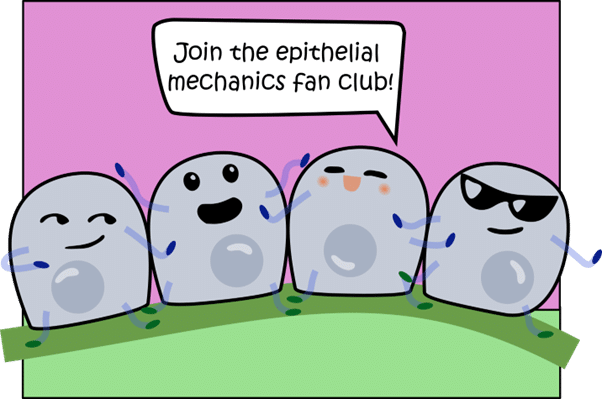
Epithelial Mechanics Fan Club

Posted by , on 4 December 2025

In this post, Nimesh Chahare and Julia Eckert tell us about the 'Epithelial Mechanics Fan Club'. You can follow the club on Bluesky, X, and now on their new website. Reach out to Nimesh and Julia if you would like to contribute.

GloBIAS – The Global BioImage Analysts’ Society

Posted by , on 20 November 2025

Over the past two years, GloBIAS has evolved from a visionary concept into a thriving and steadily growing international network.

An Introduction to the Croatian Microscopy Society

Posted by , on 19 November 2025

The origins of the Croatian Microscopy Society (CMS) can be traced back to 1983, when the Section for Electron Microscopy was established within the Croatian Society of Natural History at the initiative of Prof. Zvonimir Devidé, the first head of the Section. What began as a small group of enthusiasts meeting in Zagreb to exchange

An introduction to Microscopy New Zealand

Posted by , on 28 August 2025

Microscopy New Zealand (MNZ) started in 1978 as a periodic newsletter as a way for electron microscopists to share advice and news around New Zealand. In July 1980, the New Zealand Society of Electron Microscopy Incorporated was officially registered as an incorporated society, and in 1996, its scope was broadened to include all microscopy techniques

Connecting Researchers Through Bioimaging: Reflections from UCL’s BioImage Interest Group

Posted by , on 11 August 2025

Bioimaging: A bridge across scales and disciplines Bioimaging has become a cornerstone in modern biological research, allowing scientists to visualise the intricate structures of cells and organisms. It also allows us to bridge biological scales — from whole organisms down to molecules. Beyond its beautiful images, bioimaging provides crucial quantitative insights into a whole host

Imaging in 2035: Sustaining Infrastructure Ecosystems & Advanced Technologies

Posted by , on 16 July 2025

Join us for the 2025 BINA Community Congress, held jointly with the Global Bioimaging Exchange of Experience 2025, as part of Imaging in 2035: Sustaining Infrastructure Ecosystems & Advanced Technologies, in Montreal, Canada. (Register Here) These back-to-back events will bring the global imaging community together to shape the future of imaging science and technology, as we consider where Imaging

New strategic funding award for the UK Euro-BioImaging Node

Posted by , on 30 June 2025

Exciting news to share with you all! The UK Euro-BioImaging Node has been awarded £1.8 million in strategic funding from UKRI-BBSRC and UKRI-MRC over five years. This transformative investment will significantly expand access to cutting-edge imaging technologies for UK researchers. What this funding will deliver: This builds on our strong foundation: 14 facilities across 7

Join us as an intern

Posted by , on 27 February 2025

The Company of Biologists is looking for one or more interns, through the BBSRC DTP/PIPS or equivalent schemes, to work on our community sites – the Node, preLights and FocalPlane. This is a great opportunity to gain experience in the rapidly growing online science communication environment, to develop writing skills, and to learn about academic publishing.

Become a FocalPlane correspondent

Posted by , on 17 December 2024

Are you enthusiastic about science communication and looking for a chance to broaden your writing experience alongside your research activities? FocalPlane, our community site for microscopists, is looking to appoint three scientists as correspondents who will play a key role in developing and writing content over the coming year.

Featured image with Ciarán Butler Hallissey

Posted by , on 13 September 2024

Our featured image, acquired by Ciarán Butler Hallissey, is a maximum-intensity projection of rat hippocampal neurons processed with ultrastructure expansion microscopy (U-ExM) and captured with a spinning disk confocal microscope. Find out more about the image and Ciarán’s research below. More about the image: Expansion microscopy physically increases the size of your sample to improve