



Advertisement

Displaying posts with the tag: is_archive

Featured image with Elena Nicolay

Posted by , on 11 September 2026

Our featured image, acquired by Elena Nicolay, shows double-transgenic zebrafish larvae in a Pop Art-style collage, with macrophages and neurons depicted in different colours.

Imaging spotlight: FOCUS-3D

Posted by , on 10 September 2026

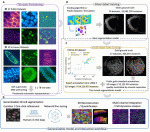
In this Imaging spotlight, Qinghua Zhang, Joaquín Navajas Acedo, Guoqiang Yu and team introduce FOCUS-3D, a tool for segmenting cells from 3D fluorescence microscopy images. We learn what's different about FOCUS-3D and how the researchers made it useful and usable for a wide-range of biologists.

Spider-like neurons finding their way: signposts for multipolar migration in the developing brain

Posted by , on 11 March 2026

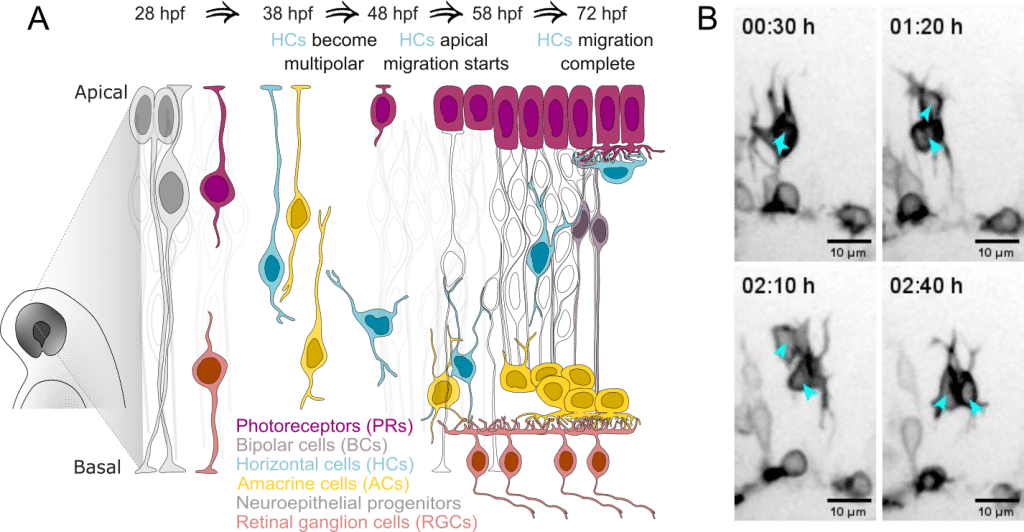
Developing neurons travel large distances and orchestrate into precise layers to enable functional wiring of the brain. Within this unique tissue environment, many neurons use their neighbors like railway tracks, navigating in a directed manner toward their correct layer. However, this is not always the case. Multipolar migration, where cells extend multiple protrusions and display

Featured image with Mathieu Preußner

Posted by , on 12 September 2025

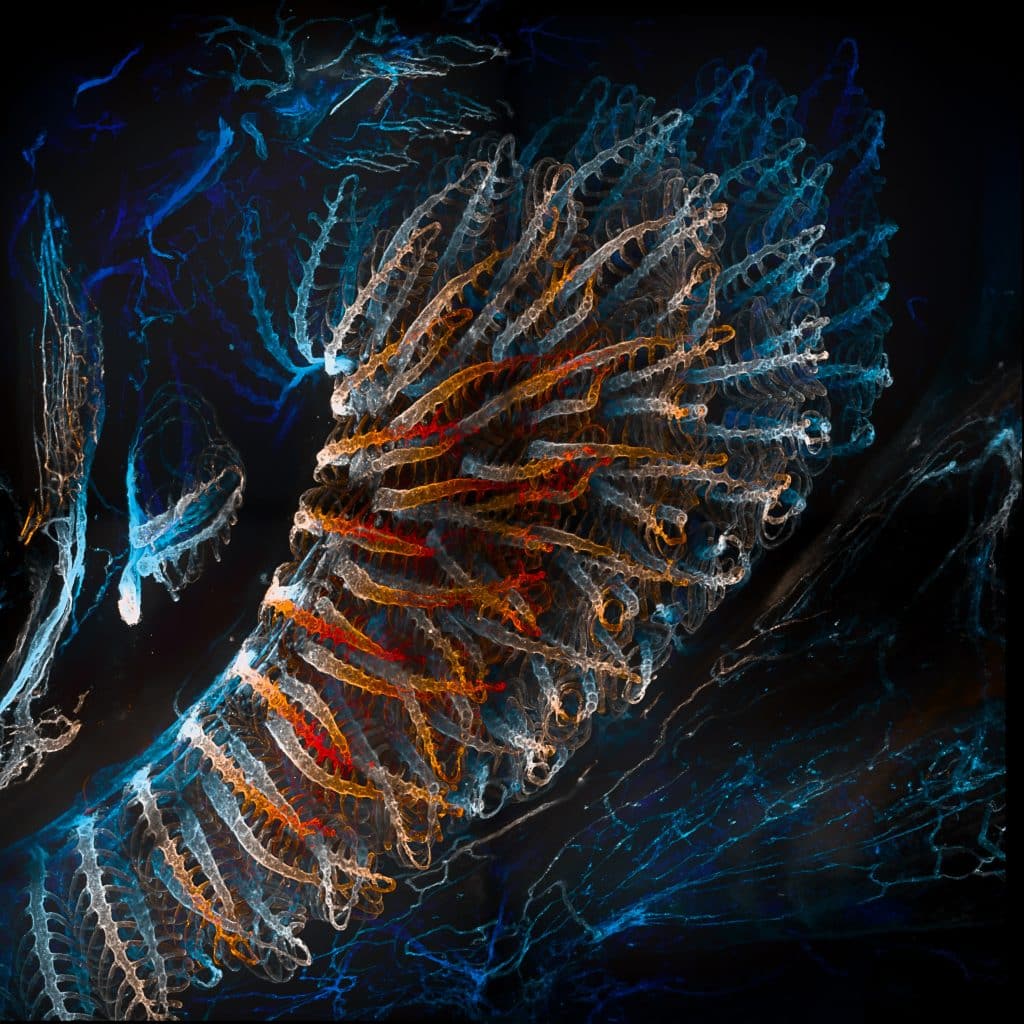
Our featured image, acquired by Mathieu Preußner, is a lateral view of the overlying gill arches in 1-month-old Danio rerio expressing endothelial kdrl:mCherry. Clarity-based tissue clearing of the sample enabled comprehensive image acquisition using a Nikon Ti spinning disk system. In ImageJ, the hyperstack was modified using a temporally colour-coded lookup table.

Announcing the winners of the Node–FocalPlane image competition.

Posted by , on 27 March 2025

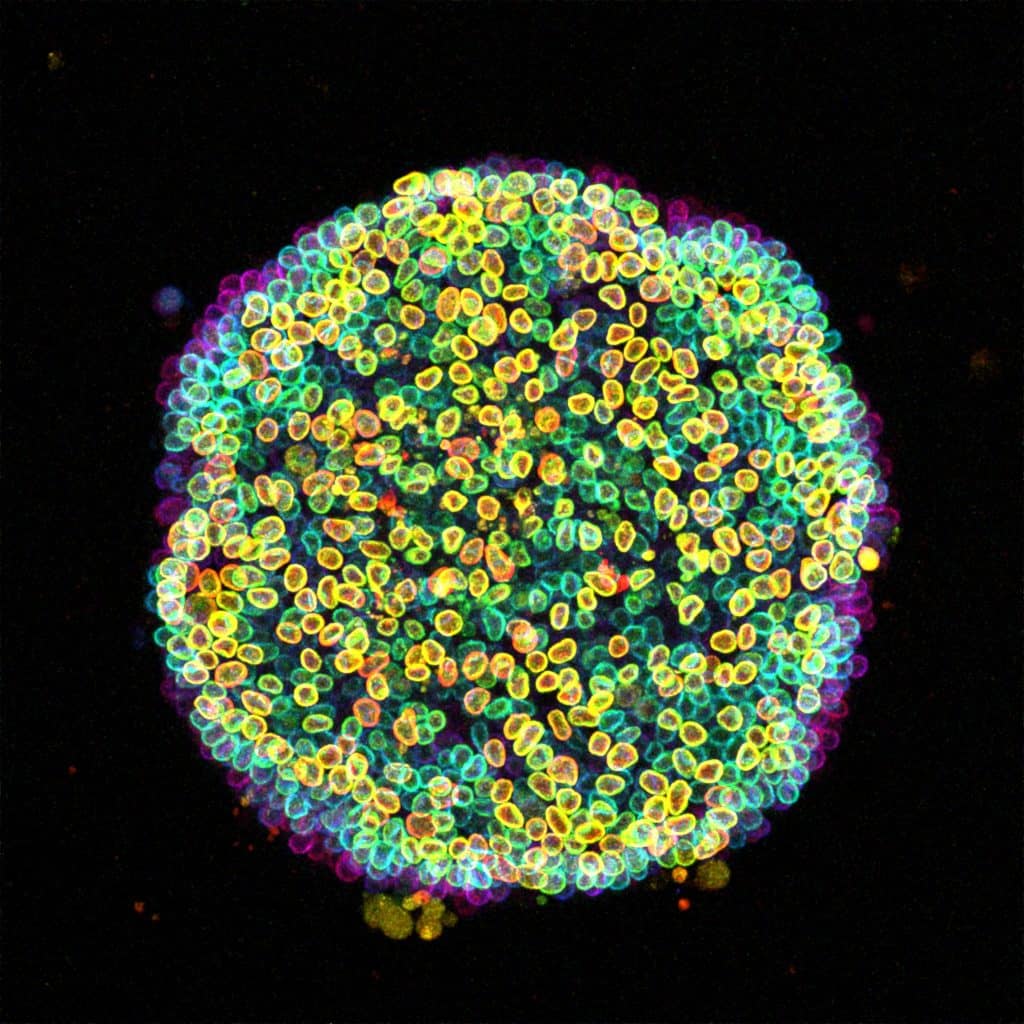
We are delighted to announce the winners of the Node–FocalPlane image competition, which we presented at the Biologists @ 100 conference, as well as on the Node and FocalPlane. In first place is ‘Cell-estial bloom’ from Özge Özgüç. Özge’s image is a colony of live hiPSCs, with fluorescently labelled Lamin B delineating the nuclear lamina

Announcing our 2025 FocalPlane correspondents

Posted by , on 24 February 2025

We are delighted to welcome our latest correspondents to the FocalPlane community. We are looking forward to working with Sally Horton, Varsha Mahapatra and Nicole Noel throughout 2025 and can’t wait to read their blog posts! Sally is a postdoctoral fellow at The Francis Crick Institute in London, UK. At The Crick, her research focusses

Featured image with Shivangi Verma

Posted by , on 30 August 2024

Our featured image, acquired by Shivangi Verma, gives us a peek into the brain of a zebrafish. It depicts neurons in the whole brain of a larva expressing GCaMP6f, a fluorescent reporter of neuronal activity, using a pan-neuronal promoter. A 10-day old transparent homozygous albino larva was embedded in agarose and imaged using ZEISS Lightsheet

Featured image with Upasana Gupta

Posted by , on 2 August 2024

Our featured image, acquired by Upasana Gupta, represents the cellular architecture of zebrafish (larva) eye. The tissue was prepared by paraformaldehyde fixation of a 4-day post fertilisation larva, followed by staining with Hoechst nuclear stain. The sample was imaged and processed using Leica SP8 confocal microscope and Leica software at the Bio-imaging facility at the

See more with HCR spectral imaging

Posted by , on 6 March 2024

In a new paper published in Development, Samuel Schulte, Niles Pierce and colleagues present a new workflow for HCR spectral imaging with linear unmixing, for simultaneous imaging of ten RNA and/or protein targets in both whole-mount zebrafish embryos and mouse brain sections.

An interview with Marco Andrés Romero Carvajal

Posted by , on 4 July 2023

MiniBio: Dr. Andrés Romero-Carvajal is a group leader and principal investigator at Pontificia Universidad Católica del Ecuador, where his lab focuses on Developmental Biology and Regeneration using different models like poison frogs, zebrafish and planaria. He studied his undergraduate degree at the same University, under the supervision of Prof. Emeritus Eugenia del Pino, from whom