


Advertisement

Displaying posts with the tag: is_archive

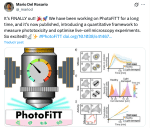
Imaging spotlight: PhotoFiTT

Posted by , on 2 March 2026

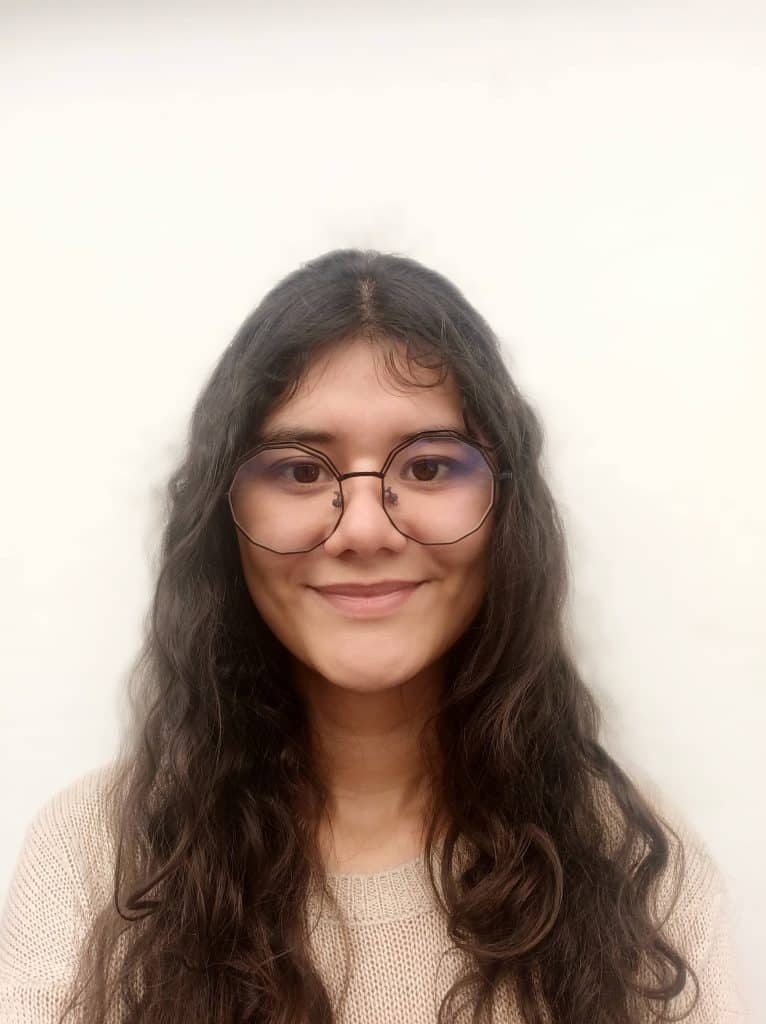
In this paper highlight, we learn about PhotoFiTT, a framework for measuring phototoxicity in live-cell fluorescence microscopy. Mario Del Rosario and Estibaliz Gómez-de-Mariscal, the co-first authors of PhotoFiTT answer our questions about their work. What is PhotoFiTT? PhotoFiTT (Phototoxicity Fitness Time Trial) couples a standardised live‑cell label-free imaging protocol with AI analysis to quantify the

Microscopy preprints - bioimage analysis

Posted by , on 30 May 2025

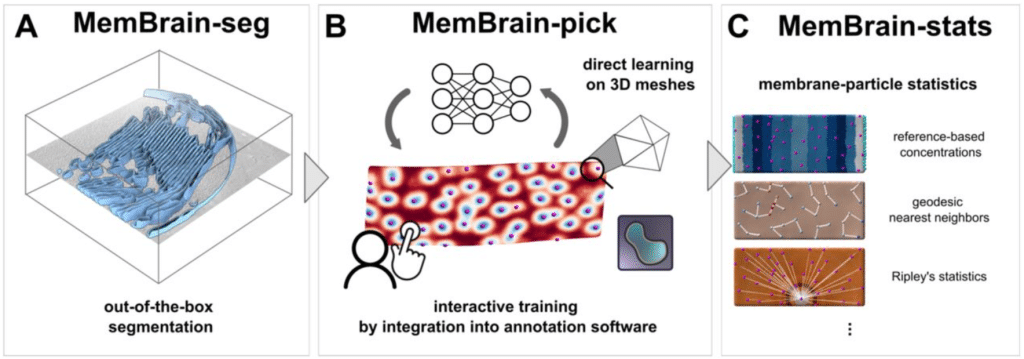
Here is a curated selection of preprints published recently (up until 22 May). In this post, we focus specifically on bioimage analysis and data management.

AI: A disruption in science, technology, philosophy, art and society.

Posted by , on 10 September 2024

Artificial intelligence has emerged as a beacon of innovation, offering not only groundbreaking solutions but also raising profound questions that remind us of the ever-present challenge of understanding ourselves and what it means to be human. Through intricate mathematical models, we now possess tools to approach and reflect on some of the most profound inquiries

BioImage.IO Chatbot: Ready to use and discover!

Posted by , on 21 August 2024

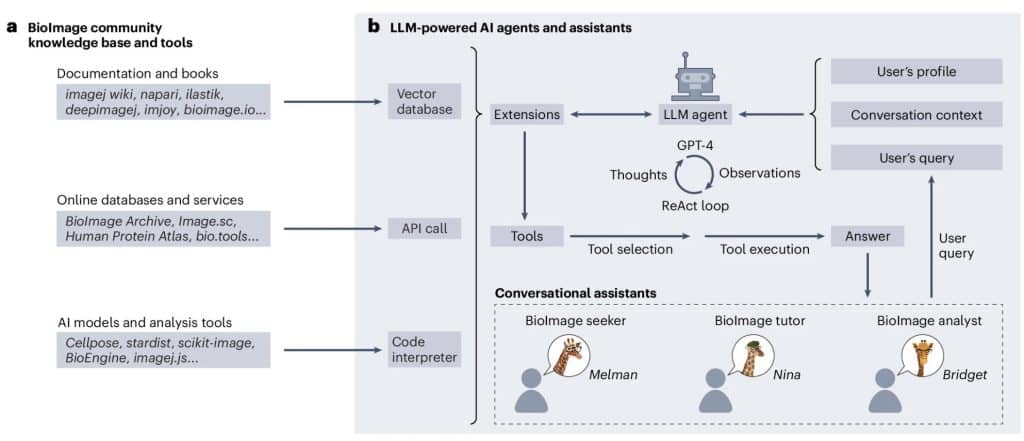
We are delighted to announce the publication of the BioImage.IO Chatbot in Nature Methods this August and its immediate availability for the bioimaging community. This milestone signifies academic recognition and marks the chatbot’s readiness for everyday use in streamlining complex bioimage analysis tasks. Broadening Access to Advanced Bioimage Analysis The BioImage.IO Chatbot, equipped with state-of-the-art

DL4MicEverywhere - Overcoming reproducibility challenges in deep learning microscopy imaging

Posted by , on 29 July 2024

DL4MicEverywhere is out! Learn about it and how you can apply deep learning workflows on microscopy imaging in reproducible research and in a user-friendly manner across different systems.

An interview with Estibaliz Gómez de Mariscal

Posted by , on 27 February 2024

At the end of 2023, DL4MicEverywhere was released. The platform aims to make deep learning methods in bioimage analysis more accessible and more reproducible. We caught up with Estibaliz Gómez de Mariscal (Esti), one of the co-leads of the project, to find out more about the platform, and to chat about Esti’s career so far

An interview with Laura Daza

Posted by , on 28 November 2023

MiniBio: Laura Daza just finished her PhD at CinfonIA, at Universidad de los Andes in Colombia. During her doctorate degree, she has worked in a variety of projects ranging from Computer Vision to image and data analysis. She studied Biomedical Engineering at Universidad de los Andes, where she first found her passion for Image Analysis.

AI4Life at the 5th NEUBIAS Conference

Posted by , on 26 May 2023

AI4Life recently participated in the 5th NEUBIAS Conference in Porto, Portugal, a two-part event comprising the Defragmentation Training School and the Open Symposium. This conference brought together experts and enthusiasts in the field of BioImage Analysis (BIA) to explore cutting-edge techniques and advancements in the integration of cloud computing. Under the umbrella of AI4Life, there

An interview with Mohammed Mostajo Radji

Posted by , on 7 March 2023

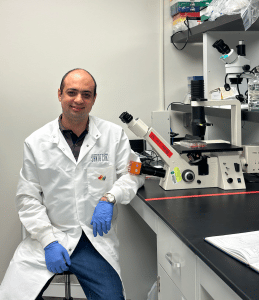
MiniBio: Dr. Mohammed Mostajo Radji is an Assistant Research Scientist at University of California Santa Cruz, where he leads a multi-disciplinary lab focusing on neuroscience and social impact, especially through cloud-controlled equipment, including microscopy. He is the Director of the UCSC Live Cell Biotechnology Discovery Lab. In his work, he combines his interest in biotechnology,

TrackMate-Oneat: Auto Track correction using deep learning networks

Posted by , on 4 July 2022

During the tracking of motile cells, solving the problem of linking objects between two consecutive timepoints becomes even more complicated, if the cells divide or undergo cell death. In the terms of trajectories, this means the addition of trajectory branches and terminations. However, dividing and dying cells are characteristic in their shape, and leveraging this