

Federal Super-Resolution Network in Argentina
Posted by Lucía Lopez, on 4 December 2025
About twenty years ago, a series of methods known today as super-resolution microscopy were discovered. Since then, super-resolution microscopy has become a powerful tool for discovery in cell biology, biomedicine, and biophysics. However, the complexity of some methods, high costs, and demanding sample preparation protocols have hindered their widespread application. In Argentina, the group led by Fernando Stefani at CIBION (CONICET) has been developing and implementing these methods for more than ten years. The use and application of super-resolution microscopy in Argentina are very incipient and practically limited to groups that have collaborated with Dr. Stefani’s team.
In 2023, within the High-Impact Federal Networks program launched by the former Argentine Ministry of Science, we proposed building a federal network for super-resolution microscopy in Argentina. The network is coordinated by Fernando Stefani from CIBION (Buenos Aires), together with Javier Adur from the Faculty of Engineering in Oro Verde (Entre Ríos) and Daniela Albanesi from the Institute of Molecular and Cellular Biology of Rosario (Santa Fe), along with their research teams.
This project aims to integrate and disseminate super-resolution fluorescence microscopy technologies (hardware, software, brainware) across Argentina. Our proposal is to build a community of super-resolution users and experts. At the same time, we will establish a wide feedback loop with new users, which will give rise to new research findings, as well as new developments and optimizations of the methodologies. Another key objective is to design, build, and distribute open hardware and software microscopes that can be replicated and used.
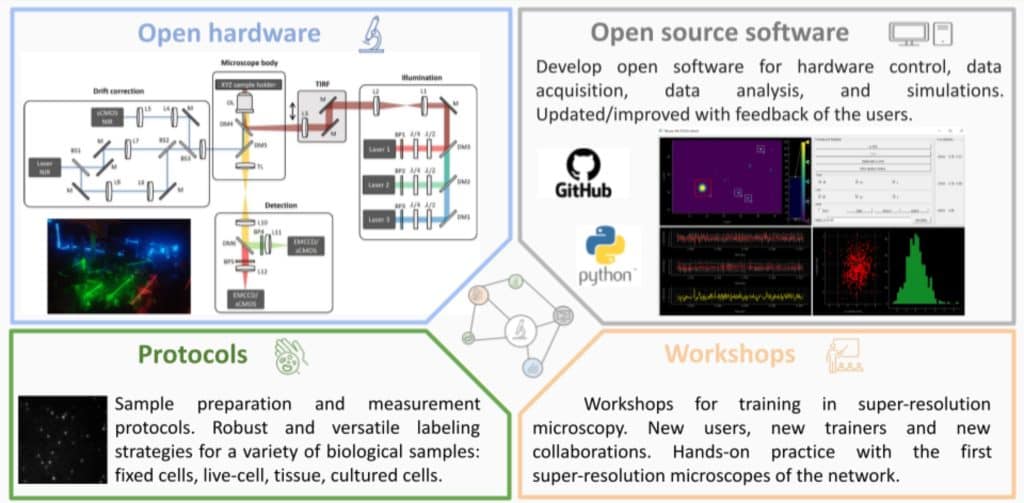
In terms of impact, instead of acquiring a single commercial super-resolution microscope, the network plans to install five new instruments at a comparable cost. We plan to train approximately 100 researchers at the user level and provide expert training to five research groups, each of which will host one of the new microscopes. An important aspect is that each group will be able to replicate and improve their microscope, allowing the network to keep growing.
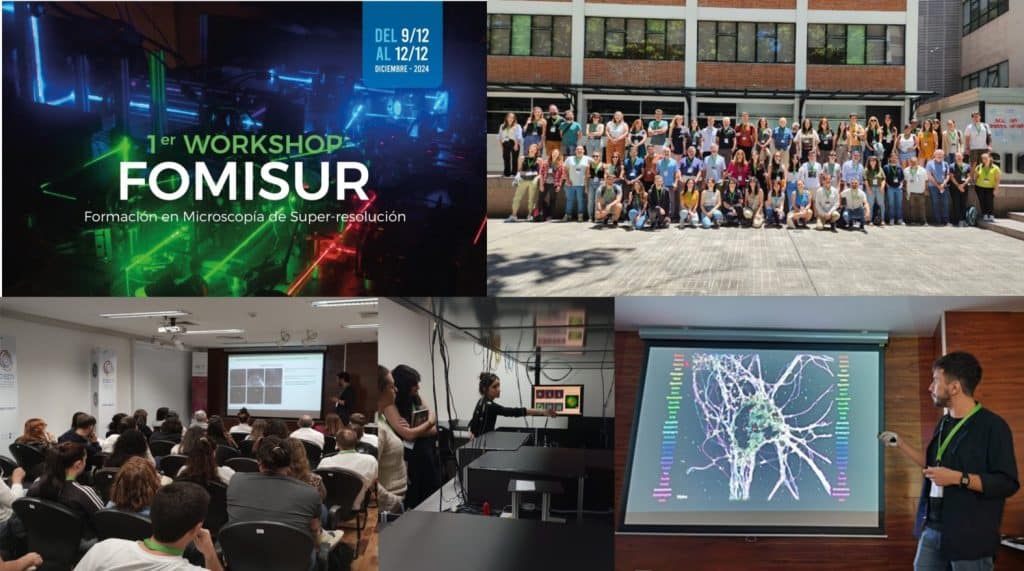
During 2024, we established the network and began active collaboration among the three initial nodes, acquiring all necessary components to build the first two microscopes for the Entre Ríos and Santa Fe nodes. We organized the inaugural FOMISUR (“Formación en Microscopía de Súper-resolución”) training in super-resolution workshop at CIBION (https://stefani-lab.ar/fomisur-2024/) in Buenos Aires. This event featured theoretical classes about super-resolution fundamentals, hands-on demonstrations in the microscopy lab, and scientific conferences with international experts of the field. With the network’s support, we provided fellowships for 20 participants from across Argentina, hosted two funded international participants (sponsored by LABI), and welcomed distinguished international guest speakers.
In 2025, we trained new experts and collaboratively built the network’s first two microscopes, scheduled for installation before year-end in Oro Verde (Entre Ríos) and Rosario (Santa Fe). We successfully conducted the second FOMISUR workshop at CIBION (https://stefani-lab.ar/fomisur-2025/), which again attracted significant participation and enabled us to provide fellowships for interested researchers from across the country. The workshop also facilitated connections with various bio imaging professionals nationwide, leading to the proposal of two new network nodes in Córdoba and Tucumán.
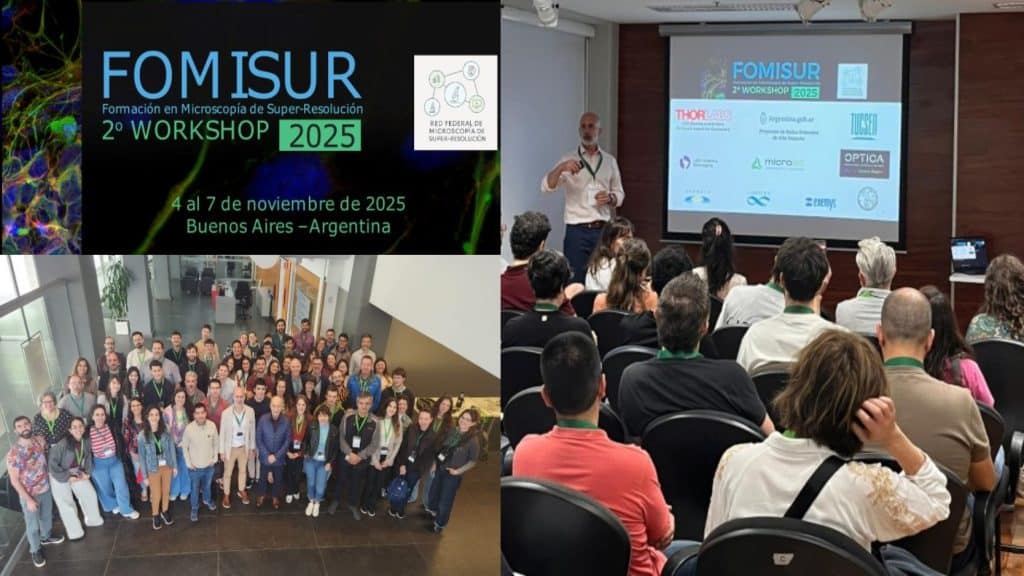
In summary, over the nearly two years of this project, we have not only assembled two new microscopes in other research centers across the country but have also fostered a new community of experts capable of building and operating these instruments, as well as a growing base of users who are gradually discovering the potential of this technology for bioimaging.
For 2026, we plan to mentor and support these emerging nodes in establishing their super-resolution microscopy capabilities and developing new experts to operate and advance these systems.
 (No Ratings Yet)
Get involved
Create an account or log in to post your story on FocalPlane.
More posts like this


Filter by
- NewsApply
- DiscussionsApply
- How toApply
- ToolsApply
- Case studiesApply
- InterviewsApply
- JobsApply
- EducationApply
- Blog seriesApply
- Volume EMApply
- Latin American Micro..scopistsApply
- Bio-image Analysis w..ith NapariApply
- Imaging with…Apply
- Towards Global Acces..sApply
- Latin America Bioima..gingApply
- From Zero to Qupath ..HeroApply
- Asian Microscopists ..and Cell BiologistsApply
- AIC at HHMI JaneliaApply
- Deep Learning for Bi..o-image analysisApply
- GloBIAS – updates fr..om the communityApply
- Highlights from Euro..-BioImagingApply
- LSFM seriesApply
- DIY MicroscopyApply
- View all