



Advertisement

Displaying posts with the tag: is_archive

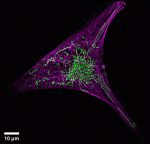
Protein micropatterning: beauty standards in cell culture

Posted by , on 16 February 2022

When imaging cells grown on a flat substrate, such as a glass coverslip, we quickly admire the diversity of morphologies different cells can take on. Some cells, such as COS7, will take on a flat “pancake”-like shape, which makes it easy to image its organellar structure in a 2D plane. On the other hand, a

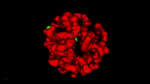
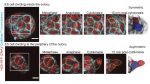
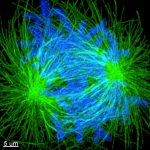
Asymmetric cell divisions in 3 dimension stem cell colonies

Posted by , on 27 September 2021

When looking at the development of a multicellular organism, for example a human, the first striking feature is the progressive increase in cell numbers due to successive divisions, from one single tiny cell 80 mm in diameter to a 3.5 kg ball of organised cells forming a new-born baby. The way cells divide, in particular

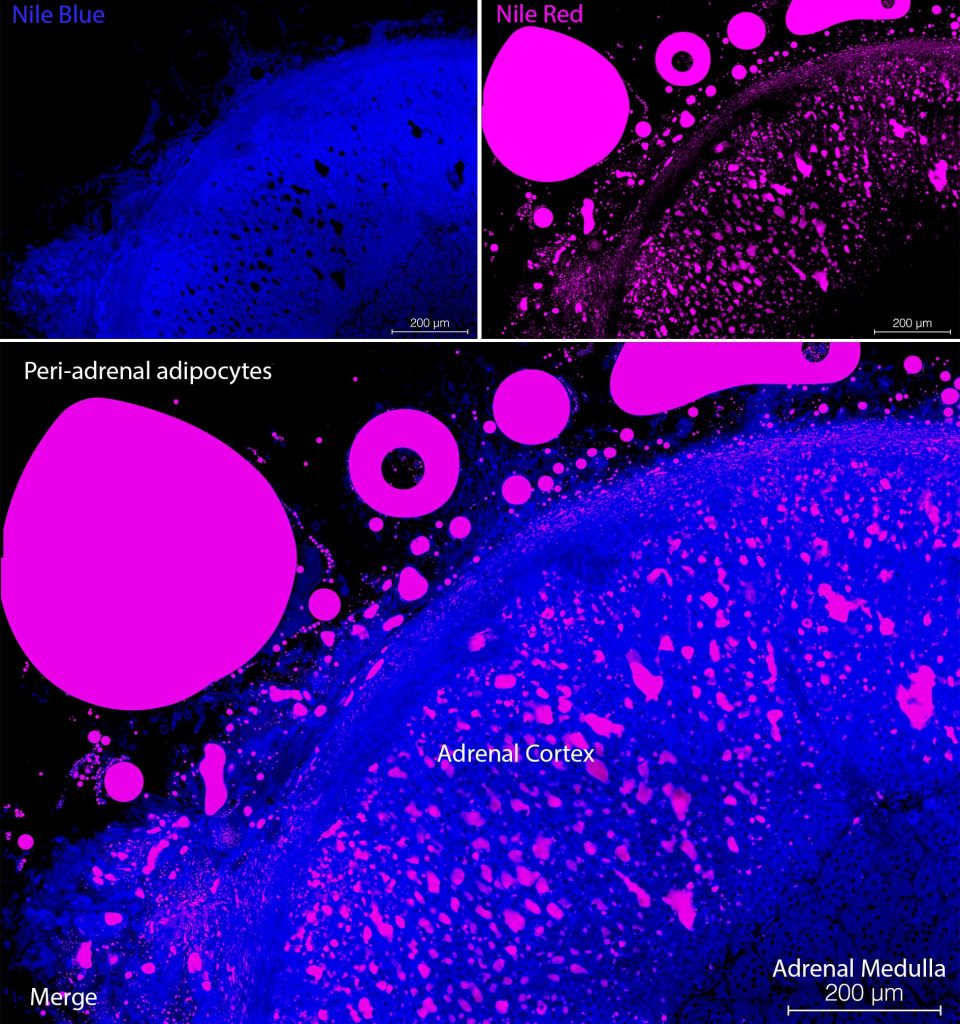
Using Nile Blue and Nile Red to visualise the presence of lipids in cryosectioned tissues

Posted by , on 14 September 2021

Lipids are crucial elements of mammalian (and non-mammalian) cell biology and yet lipids are challenging to visualise in situ. In comparison to proteins, which we can generate antibodies for, or carbohydrates, some of which we can detect using fluorescent lectins, there are relatively few lipid-specific fluorescent probes. Many lipids are highly conserved across species making

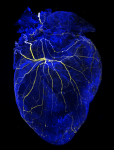
Tissue clearing: what invisible samples reveal about biology

Posted by , on 8 September 2021

Written by Jorge Almagro and Hendrik Messal The tissues that constitute organs exist in our body in 3D. However, for practical reasons, histological analysis has been traditionally performed in 2D, slicing a few micrometer-thick sections to analyse them under the microscope. While this has been critical to understand our anatomy for centuries, it constitutes a simplification of

What is Expansion Microscopy?

Sponsored by Andor, on 27 May 2021

How can you get the most information from expanded samples? Traditional light microscopy is limited by the diffraction of light, consequently, features less than 200 nm apart cannot be resolved. For a significant time microscopy technique development was focused towards improving imaging techniques to allow for individual molecules to be resolved. Super-resolution microscopy was developed

Expansion microscopy

Posted by , on 29 July 2020

Written by Shoh Asano and Ruixuan Gao Light microscopy and diffraction limit For centuries, light microscopy has played a central role in biological studies. The first implementations of a light microscope dates back to as early as the late 16th and early 17th century, when an array of polished lenses was used to magnify (biological)

Fixation artifacts and how to minimize them

Posted by , on 7 July 2020

Sample preparation is the first step for having high-quality images that will impress everyone, but it is often overlooked. Many times I have tried to help others improve their microscope images, only to find out that improvement was not possible due to the quality of the sample. No matter how expensive your microscope is, you