

Workshop report: CSHL Quantitative Imaging (QI): From Acquisition to Analysis
Posted by FocalPlane, on 4 March 2026
Estefania Sanchez-Vasquez shares her workshop report from the CSHL course on Quantitative Imaging (QI): From Acquisition to Analysis. Estefania’s attendance was supported by a JCS-FocalPlane Training Grant.
The Cold Spring Harbor Laboratory course ‘Quantitative Imaging (QI): From Acquisition to Analysis’, held from March 24 to April 8 2025, had an outstanding group of instructors led by Dr. Jennifer Waters. Their passion and dedication to training early-career researchers have made a great impact for microscopists for 10+ years.
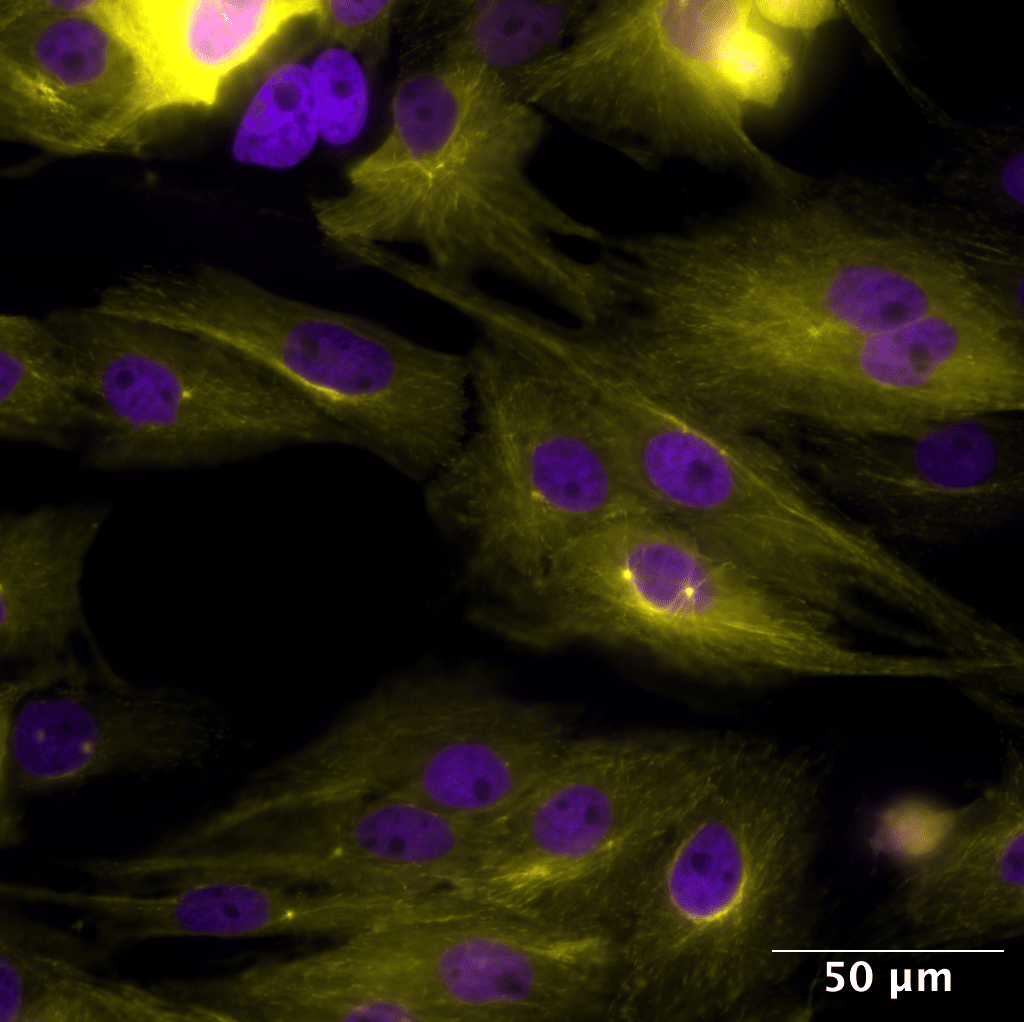
At QI 2025, I gained insights into state-of-the-art confocal microscopes and advanced image analysis tools. The course provided hands-on experience with more than ten microscopes, including TIRF, STED, and Airyscan. In addition, there was a heavy component in data analysis, mainly using open-source image analysis tools such as ImageJ, Napari, and CellProfiler. This course also introduced expansion microscopy, both theory and practice, and placed emphasis on its potential uses in mitochondrial biology. Furthermore, there were also important sections dedicated to live imaging, avoiding bias in imaging experimental designs, and the ethics of imaging acquisition and data analysis.
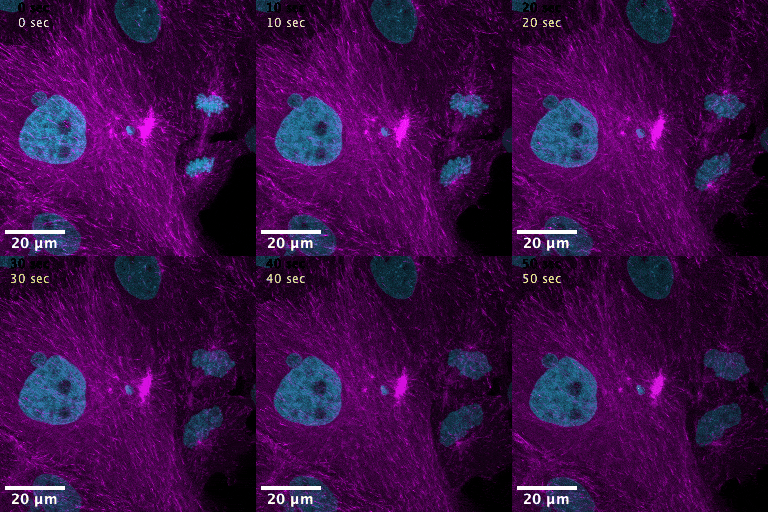
As an educator and scientist, this course has given me the tools to make my microscopy teaching more accessible for my mentees and deeply influence my experimental designs. Currently, I am performing several live imaging experiments with multiple fluorophores. Thanks to the knowledge I acquired during the course, I was able to use FPbase to optimize four fluorophores compatible with my spinning disk confocal system. In the future, I feel prepared to tackle the data analysis component of my experiments, emphasizing filtering and denoising before image segmentation. By combining good practices in microscopy data acquisition with automatic pipelines, maybe even machine learning for image segmentation, I will continue the exploration of the core transcription factors leading the primed-to-naïve transition in embryonic stem cells.
“If your background is zero, you are probably doing something wrong” – Jennifer Waters, Harvard Medical School
Get involved
Create an account or log in to post your story on FocalPlane.
More posts like this

Filter by
- NewsApply
- DiscussionsApply
- How toApply
- ToolsApply
- Case studiesApply
- InterviewsApply
- JobsApply
- EducationApply
- Blog seriesApply
- Imaging with…Apply
- Towards Global Acces..sApply
- Latin America Bioima..gingApply
- From Zero to Qupath ..HeroApply
- Asian Microscopists ..and Cell BiologistsApply
- AIC at HHMI JaneliaApply
- Deep Learning for Bi..o-image analysisApply
- GloBIAS – updates fr..om the communityApply
- WAMBIAN: West Africa.. in FocusApply
- Volume EMApply
- Latin American Micro..scopistsApply
- Bio-image Analysis w..ith NapariApply
- Highlights from Euro..-BioImagingApply
- LSFM seriesApply
- DIY MicroscopyApply
- View all